
If you spot a false widow spider, do not panic and do not try to handle it. In most cases, a single sighting is not an emergency. False widow spiders are not naturally aggressive and will usually avoid human contact. However, they can bite if they feel trapped, disturbed or accidentally pressed against skin.
The safest first step is to keep children, pets, and vulnerable people away from the area, take a clear photo if you can do so safely, and monitor for further activity. If you are seeing more than one spider, finding webs in quiet areas, or spotting them in bedrooms, garages, sheds, loft spaces or commercial premises, it is sensible to contact a professional pest control specialist.
At Obsidian Pest Control, we regularly support homes and businesses across London with spider identification, removal and long-term pest control. False widow sightings are often harmless and isolated, but in some cases, they can indicate a nearby harbourage point or nesting area that needs to be properly inspected.
For professional help, visit our false widow spider removal service page.
Should I Be Worried About a False Widow Spider?
False widow spiders have gained a lot of attention in the UK, particularly because they are often described as one of the more dangerous spiders found in Britain. That said, they are not the same as black widow spiders, and they should not be treated as an immediate danger in every situation.
In Obsidian’s experience, most false widow sightings involve spiders sheltering in quiet, protected areas rather than actively moving through a property looking for conflict. They do not seek people out, and they are not aggressive by nature.
However, they are venomous and can deliver a painful bite if handled, trapped in clothing, disturbed in a web, or accidentally pressed against the skin. For most people, symptoms are usually localised pain, redness or swelling, often compared to a bee or wasp sting. In rarer cases, bites can lead to stronger reactions, infection or symptoms that require medical attention.
That is why the advice is balanced: Do not panic, but do not ignore repeated sightings either. If you need some quick guidance on identifying a false widow, visit the Natural History Museum’s website, which provides a comprehensive analysis.
What Should You Do if You Spot a False Widow?
If you believe you have seen a false widow spider, follow these steps:
1. Do not touch or squash it by hand
Avoid direct contact. Many bites happen when spiders are accidentally handled, trapped against skin, or disturbed at close range.
2. Keep children and pets away
If the spider is in a bedroom, playroom, bathroom, pet area, garage, or shed, keep the area clear until the spider has moved on or been safely removed.
3. Take a photo if it is safe
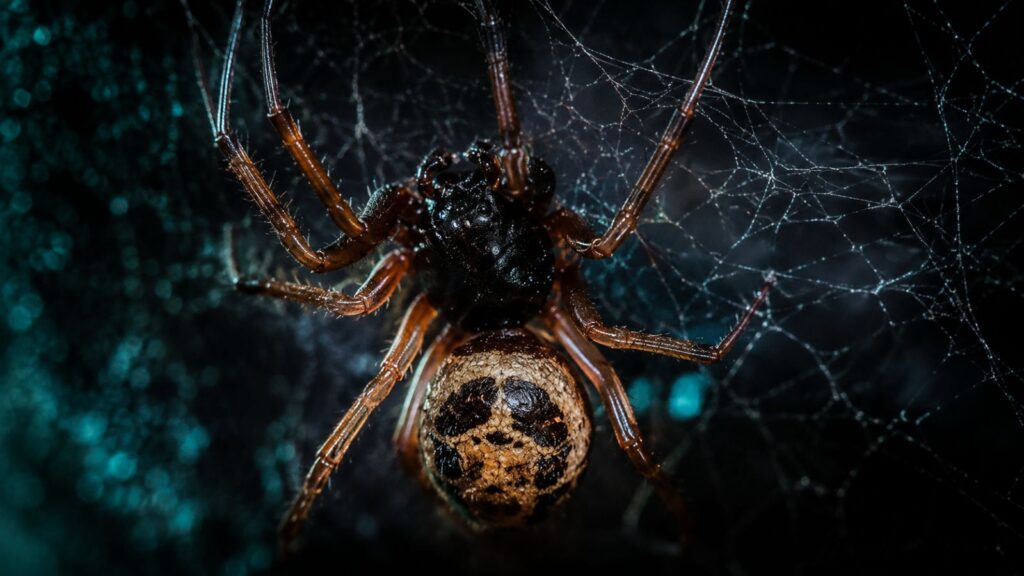
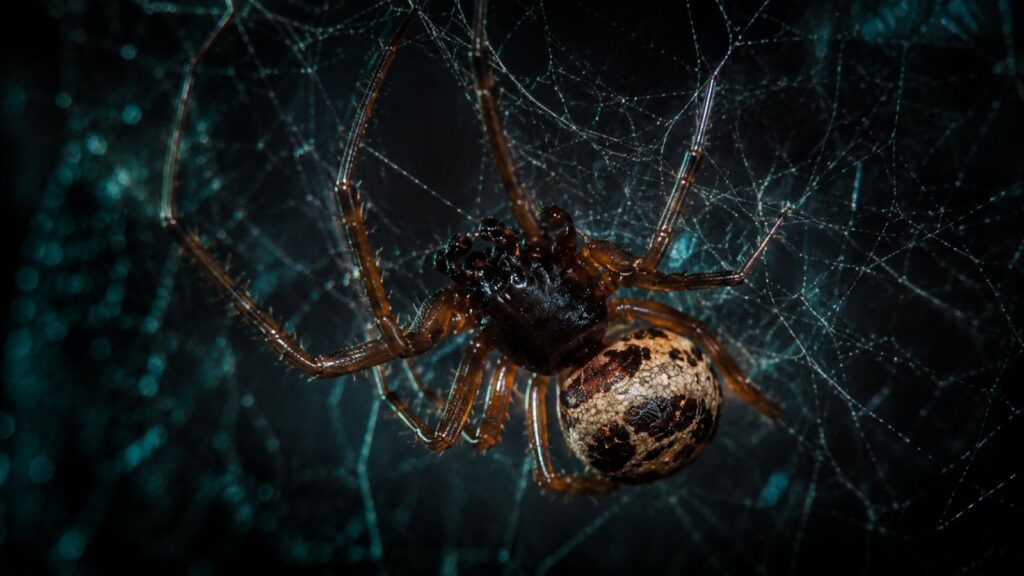
A clear photo can help with identification. False widows can be mistaken for other spider species, so professional identification is useful before assessing the level of risk.
4. Check for further signs
Look for activity in quiet, undisturbed areas such as:
- Garages
- Sheds
- Lofts
- Storage cupboards
- Window frames
- External brickwork gaps
- Wall cavities
- Utility rooms
- Behind furniture
- Around bins, clutter or stored materials
False widows often prefer protected areas where they are unlikely to be disturbed.
5. Contact a professional if sightings continue
A one-off sighting may not require treatment. However, if you are seeing several spiders, finding webs, or have vulnerable people nearby, a professional inspection is the safest route.
Where Are False Widow Spiders Usually Found?
False widow spiders are commonly found in sheltered, quiet and undisturbed areas. In London properties, Obsidian often sees spider activity linked to areas where insects, warmth, clutter and structural gaps provide suitable harbourage.
Typical locations include:
- Garages and outbuildings
- Sheds and garden storage areas
- Lofts and roof voids
- Basements and lower-ground areas
- Behind stored boxes or furniture
- Around window frames and door frames
- External pipework and brickwork gaps
- Commercial storage rooms
- Bin stores and waste areas
- Plant rooms and service cupboards
For commercial premises, sightings can be more concerning because spiders may be found in staff areas, customer-facing areas, stock rooms or hygiene-sensitive environments.
In these cases, the issue is not only the spider itself, but the wider question of why pests are being found around the premises.
Does One False Widow Mean There Is an Infestation?
Not always. A single false widow sighting may simply be a spider that has entered the property by chance or moved indoors looking for shelter. This is especially common during seasonal changes, periods of building work, or when external doors, windows, garages or storage areas are frequently opened.
However, repeated sightings can suggest a more established issue nearby. False widows may settle in protected spaces where they can build webs, remain hidden and feed on other insects.
You may have a more active issue if:
- You see several similar-looking spiders
- Webs keep appearing in the same area
- You find spiders in undisturbed storage areas
- Activity is close to bedrooms, children’s areas or pet spaces
- Spiders are appearing after cleaning or moving stored items
- There are external gaps, cavities or cluttered areas nearby
This is where professional inspection becomes valuable. At Obsidian Pest Control, we do not just remove visible spiders. We look for the conditions allowing activity to grow and continue.
Are False Widow Spiders Dangerous?
False widow spiders are not usually dangerous in the way media headlines sometimes suggest. They are not aggressive, and bites are uncommon. Most bites happen when the spider is disturbed or accidentally trapped against the skin.
However, false widows are venomous, and their bite can be painful. There were a reported 100 bites resulting in hospitalisation in 2025, which is double the figure reported in 2015.
Symptoms can include:
- Localised pain
- Redness
- Swelling
- Tingling
- Small puncture marks
- Discomfort similar to a wasp or bee sting
In some cases, people may experience stronger symptoms, especially if the bite becomes infected or if the person has an allergic or more sensitive reaction. Medical advice should be sought if symptoms worsen, swelling becomes severe, the bite area looks infected, or the person feels unwell.
For bite treatment advice, refer to trusted medical guidance, such as the NHS insect bites and stings guidance.
What if you Have Children, Pets, or Vulnerable People Around False Widows?
If children, pets, elderly relatives or vulnerable people are present, it is sensible to take false widow sightings more seriously. This does not mean you need to panic, but it does mean the risk profile changes.
Children and pets are more likely to accidentally disturb spiders in low-level spaces, such as gardens, sheds, garages, shoes, storage boxes or bedding areas. Vulnerable people may also be more affected by bites, infection or swelling.
In these situations, Obsidian would recommend:
- Avoiding DIY handling
- Keeping the area clear
- Checking shoes, clothing, bedding and stored items
- Reducing clutter where spiders may shelter
- Booking a professional inspection if sightings continue
A professional can confirm whether the spider is a false widow, assess whether there is further activity nearby, and safely treat the affected areas where necessary.
Should You Try to Remove False Widow Spiders Yourself?
For a one-off sighting, some people may choose to remove the spider carefully using a container and card, provided they can do so without touching it.
However, DIY removal is not always advisable, especially if:
- You are not confident in identifying the spider
- You have children or pets nearby
- The spider is in a bedroom or a regularly used room
- You are seeing repeated activity
- The spider is in a hard-to-reach area
- You have a commercial or tenant-occupied property
- You suspect there may be more spiders nearby
DIY sprays may also fail to address the source of the issue. If spiders are nesting in a garage, shed, loft void, cavity or cluttered storage area, removing one visible spider may not resolve the wider activity.
Obsidian’s approach is to identify the species, inspect the surrounding area, locate likely harbourage points, treat where required, and advise on practical steps to reduce the chance of recurrence.
How Obsidian Pest Control Handles False Widow Spider Sightings
Obsidian Pest Control provides professional spider control services across London for domestic and commercial properties.
Our process is designed to be safe, practical and thorough.
1. Identification
We assess whether the spider is likely to be a false widow or another common UK spider species. Misidentification is common, so this step matters.
2. Inspection
We check likely harbourage areas such as garages, sheds, loft spaces, storage rooms, window frames, cavities and external entry points.
3. Safe removal and treatment
Where treatment is required, we apply safe and effective control methods suited to the property, the level of activity and the surrounding environment.
4. Risk reduction advice
We advise on how to reduce future activity, including clutter reduction, sealing gaps, improving storage practices, removing webs, and reducing insect activity that may attract spiders.
5. Long-term control
If there is evidence of deeper activity, we help manage the issue properly rather than simply removing one visible spider and leaving the source untouched.
This is especially important in London, where dense buildings, shared walls, basements, service voids, waste areas and nearby construction can all contribute to pest movement and harbourage.
Real-World Example: Repeated Sightings in a London Storage Area
A common scenario Obsidian sees is a customer reporting what appears to be “just one spider” in a garage, shed or storage room. On closer inspection, there may be webbing around stored boxes, wall edges, pipework or window frames.
In many cases, the problem is not that the spiders are aggressive or actively invading the living space. It is that the area offers ideal shelter: quiet, dark, protected and rarely disturbed.
Once these harbourage points are identified, the issue can be dealt with properly. The visible spider is only part of the picture. The real value of professional pest control is understanding why the activity is there and what needs to change to stop it from becoming a recurring issue.
When Should You Call a Pest Control Professional?
You should consider calling a professional if:
- You have seen more than one false widow spider
- The spider is in a bedroom, a child’s room or a pet area
- You have elderly, vulnerable or allergic people in the property
- You are finding webs in garages, sheds, lofts or storage spaces
- You run a commercial, hospitality, retail or tenant-occupied premises
- You are unsure whether the spider has been correctly identified
- You have tried DIY control, and sightings continue
- You want the property inspected for wider activity
Professional support gives you clarity. It confirms whether there is a real issue, whether treatment is needed, and whether there are structural or environmental factors increasing the risk.
Final Advice: Do Not Panic, But Do Take Sensible Action
If you spot a false widow spider, the best advice is simple:
Stay calm, avoid handling it, keep children and pets away, and monitor the area.
A single sighting may be nothing more than a one-off visitor. But repeated sightings, web activity or spiders found in sensitive areas should be professionally assessed.
At Obsidian Pest Control, we help homeowners, landlords and businesses across London safely deal with false widow spiders and other pest concerns. Our experienced team can identify the issue, inspect likely harbourage points, remove and treat activity where needed, and provide practical advice to reduce future risk. For expert help with false widow spider sightings in London, visit our false widow spider removal page or contact us for professional advice.